Table of Contents
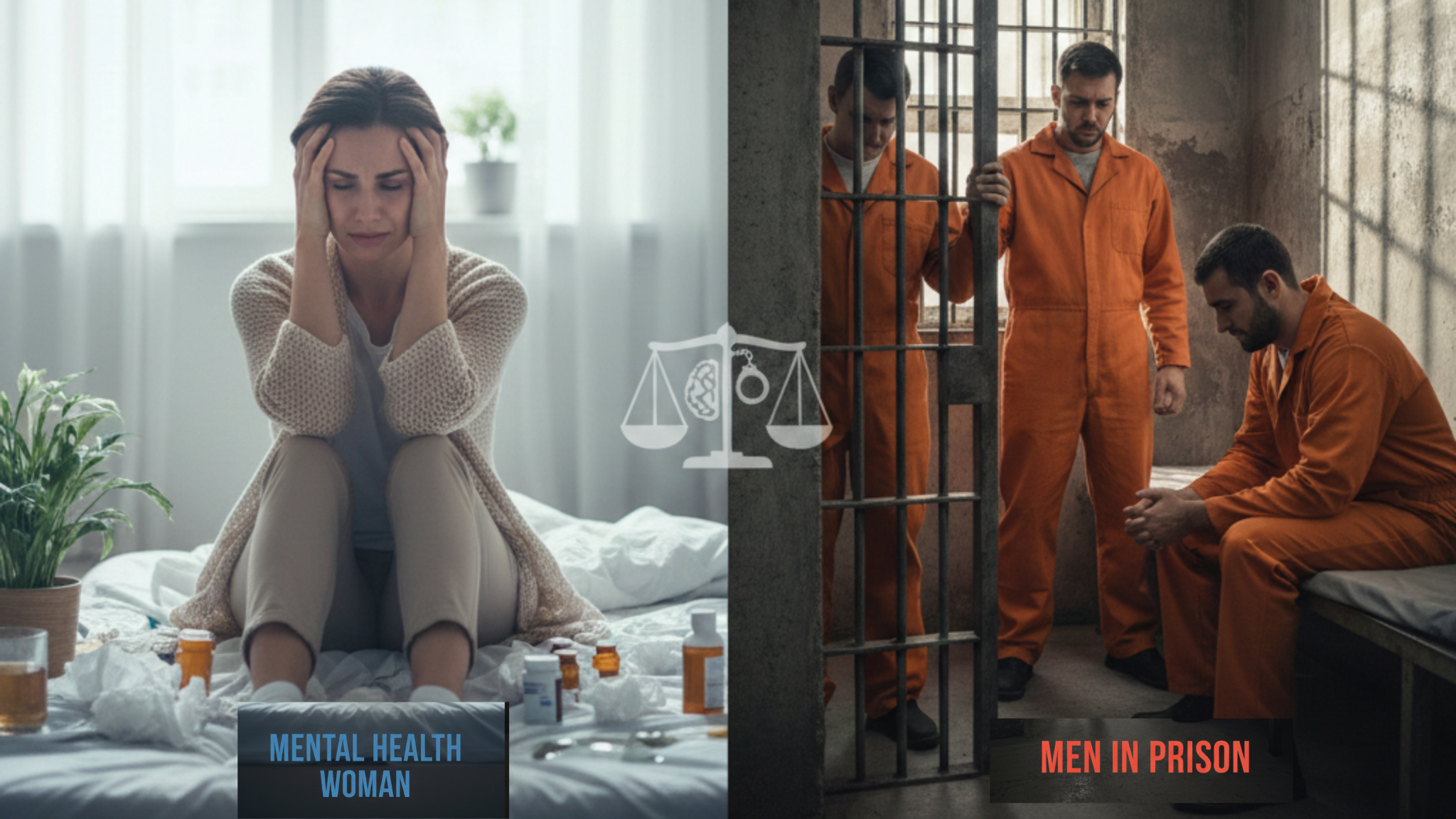
When people search for mental health woman vs men in prison, they’re usually looking for clear, evidence-based differences — not assumptions. Research over the past decade shows that mental illness affects both male and female incarcerated populations at high rates, but the patterns, causes, diagnoses, and treatment needs differ significantly by gender.
Understanding these differences is essential for policymakers, clinicians, prison administrators, and families. It also helps explain why gender-responsive mental health care in correctional settings is no longer optional — it’s necessary. Much of what we know today comes from applied Psychology and Development in Mental Health research that tracks how trauma, environment, and behavioral conditioning shape long-term outcomes.
This guide breaks down the most important distinctions using current correctional health research and government data.
Mental Health in Prison: The Big Picture
Mental illness is substantially more common in correctional populations than in the general public.
According to reports from the Bureau of Justice Statistics (BJS) and multiple correctional health reviews:
- A majority of incarcerated individuals report a history of mental health problems
- Rates of serious psychological distress are several times higher than in the general population
- Access to consistent treatment remains uneven across facilities
But when comparing mental health woman vs men in prison, the gender gap becomes clear in prevalence, trauma history, and clinical presentation — which is why structured Counselling Services in Calgary style integrated care models are increasingly referenced as benchmarks for coordinated support systems.
Prevalence: Women in Prison Show Higher Mental Health Burden
Across multiple national datasets (U.S., Canada, UK, Australia), incarcerated women consistently report higher rates of diagnosed mental health conditions than incarcerated men.
Typical prevalence patterns found in correctional studies:
Women prisoners are more likely to report:
- Major depression
- Anxiety disorders
- PTSD
- Self-harm history
- Prior psychiatric hospitalization
Men prisoners are more likely to report:
- Substance use disorders
- Antisocial personality traits
- Behavioral disorders
- Externalizing conditions linked to aggression
Several surveys show that incarcerated women report mental health problems at rates roughly 15–25% higher than men, depending on facility type and country — with mood disorder cases often requiring structured Depression Counselling approaches post-release.
Trauma Exposure: The Strongest Divider
One of the most important drivers behind the mental health woman vs men in prison gap is lifetime trauma exposure.
Women in custody show much higher rates of:
- Childhood abuse
- Sexual violence
- Domestic violence
- Coercive relationships
- Exploitation and trafficking histories
Correctional mental health researchers often refer to this as a “trauma pathway to prison” for women.
Clinical impact of trauma histories:
- Higher PTSD rates
- Complex trauma symptoms
- Emotional regulation difficulties
- Greater suicide risk
- Increased medication needs
These trauma-linked anxiety patterns are similar to those treated by a qualified Anxiety Therapist, particularly when symptoms include hypervigilance, panic response, and chronic fear conditioning.
Men in prison also experience trauma — especially community violence — but the type and pattern of trauma differ, which shapes mental health outcomes.
Diagnosis Patterns: Internalizing vs Externalizing Disorders
Another consistent finding in mental health woman vs men in prison research is the difference in diagnostic profiles.
Women inmates — more internalizing disorders:
- Depression
- Anxiety
- PTSD
- Borderline personality features
- Eating disorders (higher than male inmates)
Men inmates — more externalizing disorders:
- Substance dependence
- Conduct-related disorders
- Antisocial personality disorder
- Impulse-control problems
Because externalizing behavior is more common in male populations, facilities often rely on structured Anger Management and Counseling programs — though outcomes improve when these are paired with substance-use and cognitive-behavioral treatment models.
This matters because treatment approaches are not interchangeable. Therapy models that work well for male behavioral dysregulation may not address trauma-driven female symptom patterns.
Self-Harm and Suicide Risk Differences
Suicide and self-harm are major concerns inside correctional systems.
Research from correctional health reviews and public health agencies shows:
- Women prisoners attempt self-harm at higher rates
- Men prisoners die by suicide at higher rates
- Women show more non-fatal attempts
- Men show more lethal attempts
This difference is linked to:
- Method selection
- Help-seeking behavior
- Monitoring gaps
- Mental health diagnosis mix
Facilities that ignore gender differences in suicide prevention protocols tend to see worse outcomes — particularly where licensed clinical oversight from a Registered Social Worker or equivalent correctional mental health professional is limited.
Substance Use and Co-Occurring Disorders
Substance use disorders are extremely common across incarcerated populations — but the co-occurrence pattern differs.
Women in prison:
- More likely to have dual diagnosis (mental illness + substance use)
- Higher rates of trauma-linked substance coping
- More prescription medication histories
Men in prison:
- Higher rates of long-term substance dependence
- Greater association with criminal behavioral patterns
- Lower rates of concurrent mood disorders than women
Integrated treatment is critical — but often under-resourced.
Access to Mental Health Treatment in Prison
Treatment access varies widely by jurisdiction, but gender gaps appear here too.
Common systemic gaps affecting women:
- Fewer women’s facilities overall → fewer specialized programs
- Limited trauma-informed therapy units
- Less access to gender-specific group treatment
- Underdiagnosis of complex trauma
Common systemic gaps affecting men:
- Overcrowding reduces therapy access
- Behavioral issues prioritized over clinical care
- Medication over-reliance vs therapy
According to correctional program evaluations, gender-responsive mental health programs show better engagement and lower relapse risk, yet they are still not widely implemented.
Gender-Responsive Mental Health Care: What Works Better
Evidence from correctional psychology and rehabilitation research supports gender-responsive programming.
For women:
- Trauma-informed therapy
- Relationship-pattern counseling
- PTSD-focused interventions
- Safety and stabilization frameworks
For men:
- Substance use + behavior therapy integration
- Anger and impulse control programs
- Cognitive behavioral interventions
- Violence reduction therapy
One-size-fits-all mental health care models underperform in correctional settings.
Why This Difference Matters for Policy and Outcomes
Understanding mental health woman vs men in prison is not just academic — it affects:
- Suicide prevention
- Recidivism rates
- Treatment cost efficiency
- Post-release stability
- Community safety outcomes
Facilities that tailor mental health services by gender show:
- Better treatment engagement
- Lower behavioral incidents
- Improved reentry outcomes (reported in multiple correctional program reviews)
Key Takeaways: Mental Health Woman vs Men in Prison
- Women in prison have higher rates of diagnosed mental illness
- Trauma exposure is the largest differentiator
- Women show more internalizing disorders; men show more externalizing patterns
- Self-harm attempts are higher among women; suicide deaths higher among men
- Gender-responsive mental health care produces better results
- Treatment equality does not mean treatment sameness